




At some point, you may be asked to prove that you control a domain name. This request often surprises domain owners and can feel confusing or even suspicious at first. Common questions include:
The short answer is this Domain ownership proof is a standard security and compliance process, not a judgment on your rights.
This guide explains when domain ownership proof is required, which methods are commonly accepted, which methods you should avoid, and how to complete verification safely and correctly.
What Does “Domain Ownership Proof” Mean?
Domain ownership proof is a way to demonstrate that you currently control and manage a domain, using verifiable technical or account based methods.
It does not mean transferring ownership, revealing private documents, or giving control to another party. Instead, it confirms that you have active authority over the domain.
Many domain owners assume that WHOIS records automatically prove ownership. In practice, this is often not the case.
WHOIS information may
-
Be protected by privacy services
-
Display proxy or registrar details
-
Be outdated or partially hidden
Because of this, many platforms and compliance processes rely on active control verification, not public WHOIS data.
Common Situations Where Domain Ownership Proof Is Required
You may be asked to prove domain control in the following scenarios:
-
Connecting third party services such as CDN, analytics, or website builders
-
Issuing or renewing SSL certificates
-
Configuring email services such as SPF, DKIM, or DMARC
-
Security reviews or account verification
-
Abuse or dispute related communication
-
Compliance checks by platforms or service providers
These requests are not targeted at you personally. They are part of standard internet security practices.
DNS Record Verification
This is the most widely accepted and secure method.
You are asked to add a specific TXT record or verification value to your domain’s DNS settings.
Why this works
-
Only the domain controller can modify DNS records
-
No personal information is shared
-
It provides strong technical proof
Common concerns
-
DNS changes may take time to propagate
-
Verification usually completes within minutes to a few hours
In some cases, a screenshot showing the domain inside your registrar account may be requested.
This method is typically used for
-
Initial reviews
-
Support or compliance confirmation
Limitations
-
Not accepted by all third parties
-
Should never include passwords or sensitive data
Some services send verification links to domain based email addresses such as admin, webmaster, hostmaster.
This method requires that email for the domain is already configured.
If you do not have domain email set up, DNS based verification is usually the better option.
File Based Website Verification
This method involves placing a verification file in the website root directory.
It is suitable when
-
A website is already live
-
You have access to hosting files
It is not suitable if the domain is not yet connected to a website.
To protect your privacy and security, you should avoid providing the following as proof of domain ownership:
-
Personal ID documents
-
Business registration certificates
-
Payment or invoice screenshots
-
Chat logs or emails
-
Personal email account screenshots
Legitimate domain ownership verification focuses on domain control, not personal identity.
Nicenic provides domain owners with clear and reliable tools to complete ownership verification safely.
With Nicenic, you can
-
Manage DNS records through a straightforward control panel
-
Add TXT records easily for verification purposes
-
Receive guidance on choosing the correct verification method
-
Avoid unnecessary or unsafe disclosure of personal information
In compliance or dispute related situations, Nicenic helps ensure that verification is handled correctly and according to established policies.
Final Thoughts
Being asked to prove domain ownership is a normal part of managing a domain online. It does not mean your rights are in question, and it does not require sharing sensitive personal documents.
The safest approach is always to use control based verification, such as DNS records, and to work with a registrar that operates transparently and in full compliance with global standards.
As an ICANN accredited registrar, Nicenic follows strict policies designed to protect domain owners while maintaining security and trust across the internet.
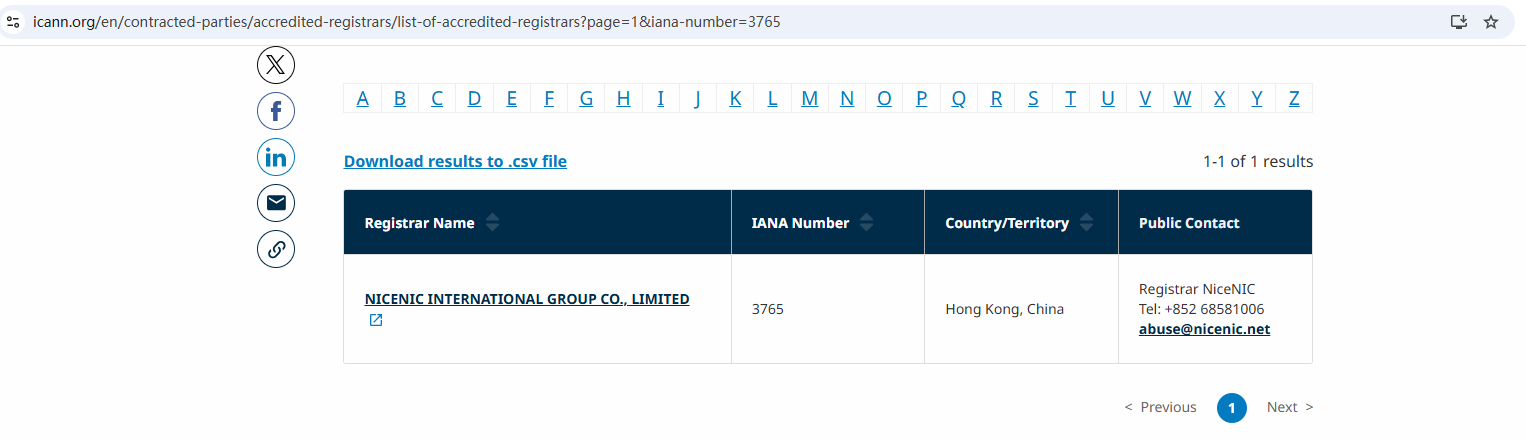
Nicenic stands as that trusted partner for brands, developers, entrepreneurs, and businesses worldwide.
Next News: Cheap Domain vs Good Registrar: What You Actually Pay Over 3 Years