





Choosing a domain registrar is a long-term decision that affects your brand security, operating costs, SEO performance, and even legal risk. While registering a domain takes only minutes, switching registrars later can be time-consuming and disruptive.
Instead of focusing on promotional prices or brand recognition alone, smart businesses evaluate registrars using clear criteria. Below are 12 essential things to check before choosing a domain registrar, especially in 2026 and beyond.
1. ICANN Accreditation
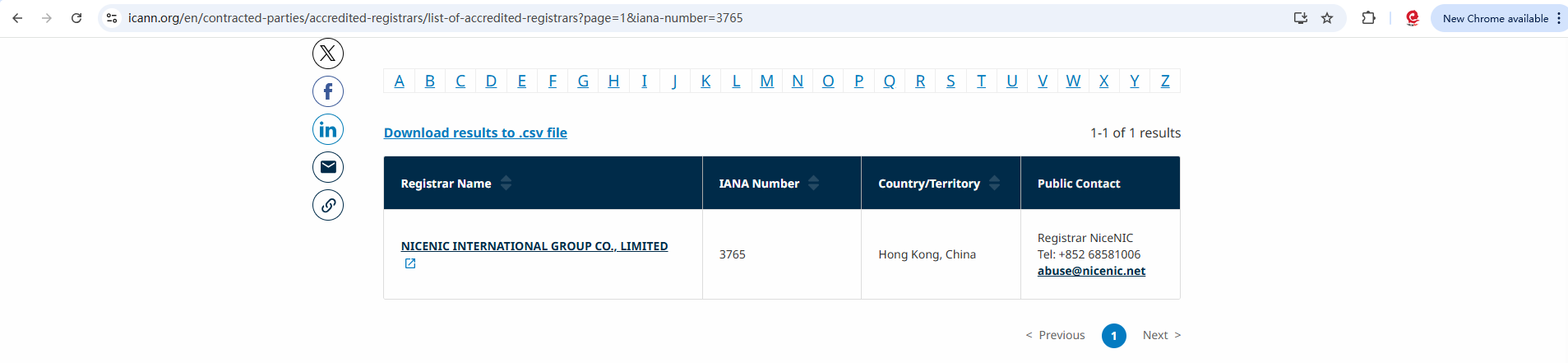
Always confirm that the registrar is ICANN-accredited. Accreditation means the registrar operates under global standards for security, compliance, and accountability.
Non-accredited resellers rely on third parties, which increases risk during disputes, transfers, or outages. Registrars like NiceNIC, which hold direct ICANN accreditation, provide stronger ownership protection and clearer escalation paths.
2. Renewal Pricing Transparency
Introductory pricing is easy to advertise. Renewal pricing is what actually matters.
Check:
-
Whether prices increase unexpectedly after the first year
-
Whether fees are clearly disclosed
Registrars with predictable renewal policies help businesses plan budgets and avoid unpleasant surprises.
3. Domain Transfer Policy
A trustworthy registrar should make it easy to leave. Look for:
-
Instant access to EPP or Auth codes
-
No artificial transfer delays
-
Clear transfer documentation
Registrars that hide or restrict transfer codes often rely on lock-in rather than service quality.
4. Security Features Included by Default
Domain hijacking remains one of the most serious risks online.
A reliable registrar should include:
-
Two-factor authentication
-
Registrar lock
-
DNSSEC support
-
Secure account recovery
Security should be built-in, not sold as optional add-ons. NiceNIC follows this security-first approach aligned with ICANN and registry best practices.
5. Abuse Handling Transparency
Every domain owner may face abuse reports at some point, whether justified or mistaken.
Check whether the registrar:
-
Follows ICANN-compliant abuse processes
-
Communicates clearly with domain owners
-
Allows reasonable response time
-
Documents decisions transparently
Registrars that handle abuse quietly or arbitrarily expose customers to unnecessary risk.
6. Customer Support Quality
When problems occur, support quality matters more than price.
Evaluate:
-
Availability of human support
-
Technical knowledge of agents
-
Clarity of explanations
-
Response time for DNS and transfer issues
Smaller ICANN-accredited registrars like NiceNIC often outperform large retail platforms in complex support scenarios.
7. TLD Portfolio Size
A broad TLD selection matters for:
-
Brand protection
-
International expansion
-
Portfolio consolidation
Registrars offering thousands of TLDs allow businesses to manage global assets in one place. NiceNIC supports more than 2500+ TLDs, covering gTLDs, ccTLDs, and new extensions.
8. Global and Multilingual Support
If your business operates internationally, language and regional accessibility matter.
Check whether the platform offers:
-
Multilingual dashboards
-
Support for international teams
-
Region-aware documentation
NiceNIC supports multiple languages(English, Russian, French, Spanish and Arabic), making domain management easier for global organizations.
9. Payment Flexibility
Traditional payment systems do not work everywhere.
Modern registrars increasingly support:
-
Multiple currencies
-
International payment methods
-
Cryptocurrency options
NiceNIC supports BTC, USDT, LTC, and ETH, enabling users in banking-restricted regions to maintain uninterrupted domain ownership.
10. API and Automation Capabilities
For developers, agencies, and hosting providers, automation is essential.
Look for:
-
Well-documented APIs
-
Bulk domain tools
-
Automated DNS and renewal management
Registrars with strong APIs enable scalable operations rather than manual workarounds.
11. Long-Term Platform Stability
A registrar should be built for longevity, not short-term growth.
Indicators of stability include:
-
Clear corporate identity
-
Compliance history
-
Infrastructure investment
-
Consistent product development
NiceNIC positions itself as an infrastructure-grade registrar rather than a discount-driven retail platform.
12. Strategic Guidance Beyond Registration
The best registrars act as advisors, not checkout systems.
They help customers:
-
Choose the right extensions
-
Structure domain portfolios
-
Avoid SEO fragmentation
-
Plan for future markets
This consultative approach adds value far beyond basic domain registration and is where registrars like NiceNIC differentiate themselves.
Conclusion
Choosing a domain registrar is about trust, not just convenience.
By evaluating registrars across these 12 criteria, businesses can avoid hidden costs, reduce security risks, and build a stable foundation for growth. The right registrar supports your brand, protects your assets, and scales with your ambitions.
Registrars like NiceNIC, which emphasize transparency, security, global accessibility, and long-term thinking, reflect how domain services are evolving in 2026 and beyond.
Next News: What Is a .NET Domain? How to Register a .NET Domain