





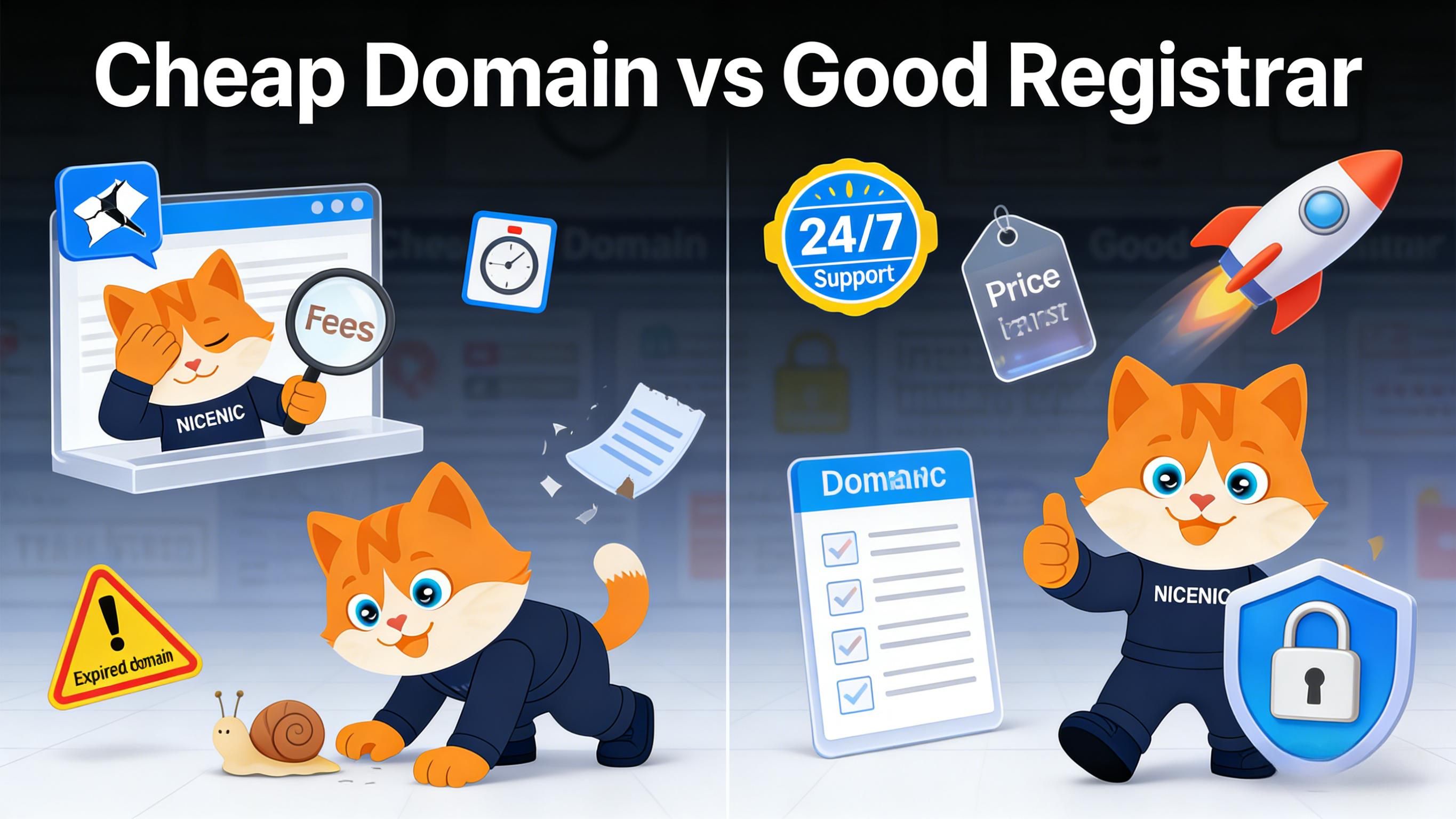
Many domain owners choose a registrar based on the lowest first-year price, assuming that a domain is a simple commodity. In reality, domains are long-term digital assets, and the real cost is not what you pay today, but what you pay over the next three years in renewals, support time, security risk, and operational friction.
This article breaks down the real three-year cost difference between choosing a cheap domain provider and choosing a reliable registrar, and why more businesses are rethinking the decision.
Year 1: The Illusion of a Cheap Domain
At this stage, most users experience:
-
Easy registration
-
Minimal interaction with support
-
No immediate security issues
The problem is that Year 1 rarely reflects reality. Promotional pricing is designed to optimize sign-ups, not long-term ownership. Very little is revealed about renewal pricing, support quality, or policy friction.
At this point, both a cheap registrar and a good registrar appear similar, but only temporarily.
Year 2: Renewals, Friction, and Hidden Costs
Year 2 is where the real costs begin to surface.
Many low-cost registrars increase renewal prices sharply, often without clear advance notice. A domain that cost under $2 in the first year may now renew at $18–$25 or more. At the same time, users begin interacting more frequently with the registrar for DNS changes, transfers, or account issues.
Common hidden costs appear:
-
Time spent understanding confusing dashboards
-
Delays caused by slow or scripted support
-
Extra fees for security features
-
Stress during renewals or transfers
By contrast, registrars with transparent pricing and stable policies cost more upfront, but reduce operational friction. Predictable renewals allow budgeting. Clear interfaces reduce mistakes. Competent support reduces downtime.
This is where the “cheap” choice starts becoming expensive.
Year 3: Risk, Stability, and Opportunity Cost
By the third year, domains are no longer just registrations. They are tied to websites, email systems, marketing campaigns, and brand identity.
At this stage, the real risks emerge:
-
Transfer delays when switching registrars
-
Account lockouts or recovery issues
-
Security incidents such as unauthorized changes
-
Poor handling of abuse or compliance complaints
The cost here is not just money. It is lost time, lost trust, and lost business opportunities.
Good registrars invest in infrastructure, security, and process. They treat domains as critical assets, not disposable products. Over three years, this approach often results in lower total cost, even if the initial price was higher.
What a “Good Registrar” Actually Saves You
A good registrar is not defined by slogans, but by outcomes.
Over three years, users typically save:
-
Money through stable renewal pricing
-
Time through clear tools and automation
-
Risk through built-in security and compliance
-
Effort through responsive, knowledgeable support
This is why businesses, domain investors, and global teams increasingly move away from discount-driven platforms and toward infrastructure-focused registrars.
Where NiceNIC Fits in This Comparison
NiceNIC is positioned for users who look beyond first-year pricing and evaluate total ownership cost.
Instead of competing on extreme discounts, NiceNIC focuses on:
-
Predictable renewal pricing without surprise spikes
-
Human technical support for DNS, transfers, and disputes
-
Built-in security such as 2FA, registrar lock, and DNSSEC
-
Clear, ICANN-compliant abuse handling
-
Infrastructure designed for long-term ownership and global use
For many users, the decision to move to NiceNIC happens in Year 2 or Year 3 — when the real cost of a “cheap domain” becomes clear.
A Simple Three-Year Comparison
While exact numbers vary by extension, the pattern is consistent:
-
Cheap registrar
Low Year 1 cost → High renewal → Added fees → Time and risk costs -
Good registrar
Fair Year 1 cost → Stable renewals → Fewer issues → Lower total cost
The difference is not just financial. It is operational and strategic.
Conclusion: Cheap Is a Price. Good Is a Strategy
When evaluated over three years, many “cheap” domains turn out to be expensive, while registrars built for stability, transparency, and security deliver better outcomes with lower total cost.
For domain owners who treat their online presence seriously, the smarter decision is rarely the cheapest option. It is the one that still makes sense three years later.
That is where registrars like NiceNIC earn their reputation.
Next News: Why Smart Brands Are Buying Domains