





In 2026, choosing a domain registrar is no longer a simple checkout decision. Registrars now differ significantly in how they price renewals, handle support, and protect domain ownership. This comparison breaks down how today’s major registrar models perform across pricing transparency, customer support, and security standards, and why these differences matter for long-term users.
Pricing Compared: Promotional Discounts vs Long-Term Cost Control
Most large retail registrars still compete aggressively on first-year pricing. Ultra-low introductory offers attract new users, but renewals often increase sharply after the first year. This model works for short-term registrations but creates cost uncertainty for businesses and domain investors.
By contrast, a growing group of ICANN-accredited registrars focuses on predictable renewal pricing. Instead of heavy discounts, they offer clearer long-term cost structures designed for users who plan to hold domains for multiple years.
-
Large retail registrars: very low first-year prices, higher renewal volatility
-
Infrastructure-focused registrars: moderate entry pricing, stable renewals
NiceNIC follows the second model, which is why it is increasingly chosen by portfolio holders and businesses that value budgeting certainty over promotional pricing.
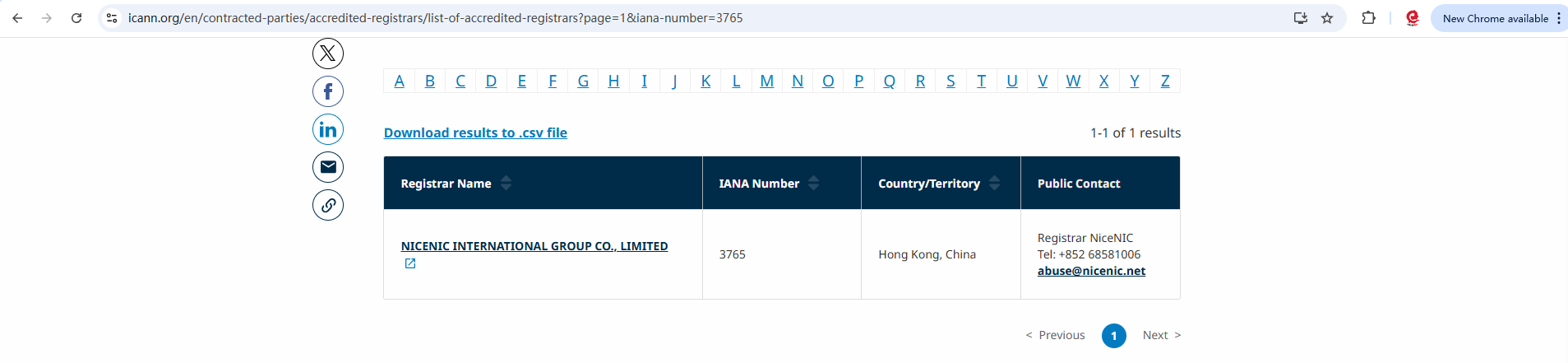
Support Compared: Scaled Ticket Systems vs Human Technical Support
Support quality is where differences between registrars become obvious.
High-volume registrars typically rely on layered ticket systems optimized for scale. While this works for basic requests, complex issues such as transfers, DNS misconfiguration, or compliance disputes often require multiple escalations.
Smaller ICANN-accredited registrars tend to invest more heavily in direct human support, especially for technical and policy-related matters.
-
Large platforms: fast automated responses, slower resolution for complex issues
-
Specialist registrars: fewer bots, faster access to knowledgeable staff
NiceNIC positions itself in the second category, focusing on hands-on support for DNS, transfers, and abuse handling, which are areas where users often experience the most frustration.
Security Compared: Optional Add-Ons vs Built-In Protection
Security is no longer optional in 2026. Domain hijacking, unauthorized transfers, and DNS abuse incidents continue to rise, making registrar-level protection critical.
Some registrars still treat security features as paid upgrades, while others integrate them as default protections aligned with ICANN and registry standards.
Comparison in practice
-
Basic registrars: limited default protection, security sold separately
-
Security-first registrars: 2FA, registrar lock, DNSSEC, and WHOIS privacy included
NiceNIC follows a security-first approach, offering registrar-level locks, DNSSEC support, two-factor authentication, and structured abuse handling as part of its core service rather than premium add-ons.
Global Accessibility Compared: Local Focus vs International Readiness
As businesses expand globally, registrars differ in how well they support international users.
Many traditional registrars still operate primarily in English and rely on limited payment systems. Others have adapted to global demand with multilingual interfaces and alternative payment options.
-
Traditional registrars: English-only platforms, card-based payments
-
Global-ready registrars: multi-language dashboards, crypto support
NiceNIC supports multiple languages and accepts BTC, USDT, LTC, and ETH, making it easier for international teams and users in banking-restricted regions to manage domains without friction.
Automation Compared: Manual Management vs API-Driven Infrastructure
In 2026, registrars increasingly serve hosting providers, SaaS companies, and agencies that require automation.
Some registrars still focus on manual control panels, while others invest in APIs that enable scalable domain operations.
-
Retail-focused registrars: limited automation, manual workflows
-
Infrastructure registrars: full APIs, bulk tools, reseller systems
NiceNIC’s API ecosystem supports automated registration, renewals, DNS updates, and portfolio management, aligning with modern operational needs.
Which Type of Registrar Is Best in 2026
The best registrar depends on how domains are used.
-
Short-term or single-domain users may prioritize discounts
-
Businesses and global brands prioritize stability and support
-
Developers and hosting providers need automation and APIs
-
Domain investors need predictable pricing and bulk tools
NiceNIC is best suited for users who value long-term ownership, security, and operational reliability over short-term promotional pricing.
Conclusion: Comparison Reveals the Real Differences
When domain registrars are compared side by side, the differences are clear. Pricing models determine long-term cost. Support structures determine how quickly problems are solved. Security frameworks determine whether digital assets remain protected.
In 2026, the best registrars are those built for stability rather than volume. By combining transparent pricing, human technical support, strong security defaults, and global accessibility, registrars like NiceNIC represent a shift toward infrastructure-grade domain services rather than transactional platforms.
Next News: Web Hosting vs Cloud Server vs Dedicated Server: Which Should You Choose?