





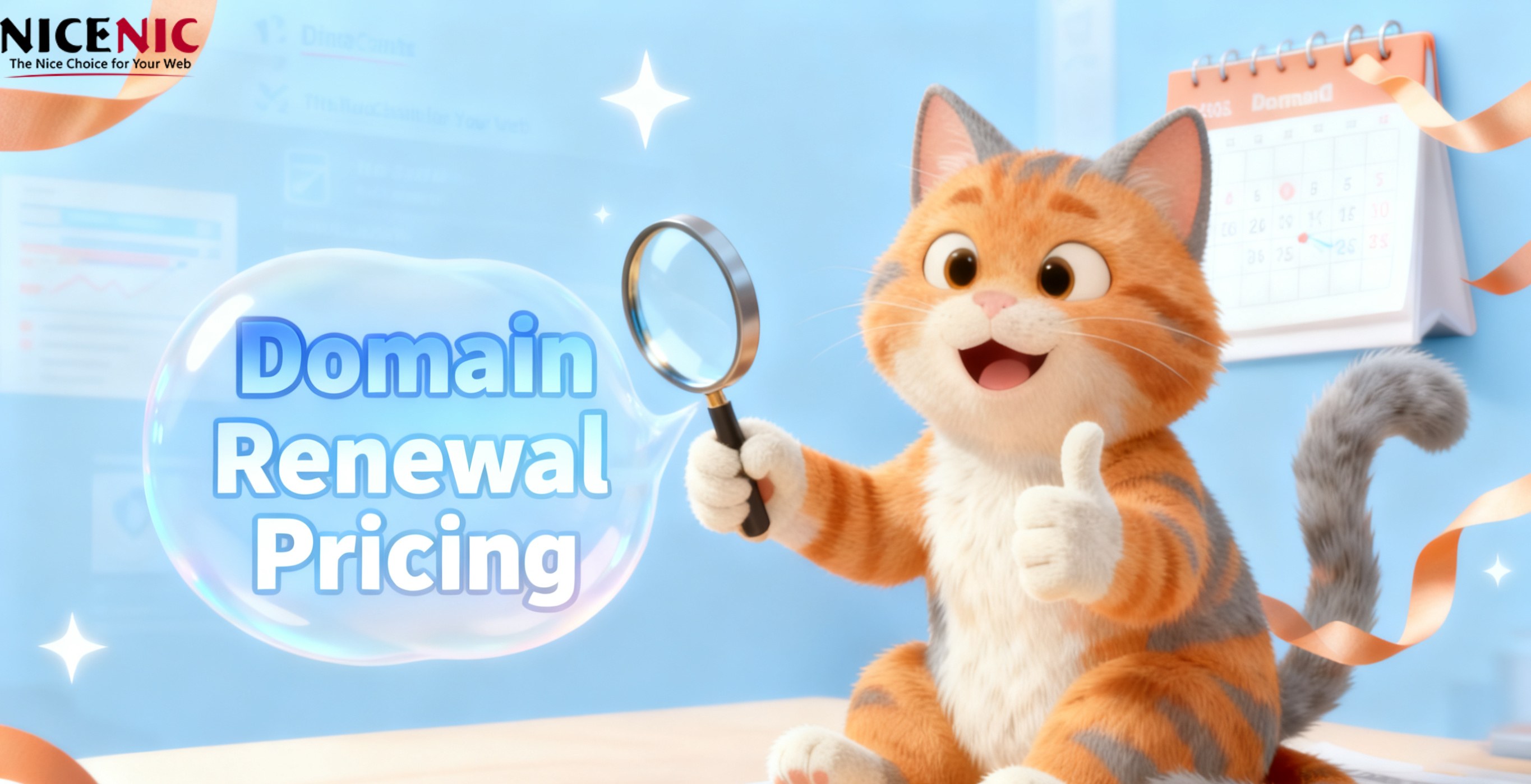
When most people buy a domain name, they pay attention to one thing: the first-year price. And who can blame them? Many registrars promote irresistible offers like 0.99 dollars or even free for the first year. But what many buyers don’t realize is that the real cost of a domain isn’t what you pay today — it’s what you will keep paying every year after.
If you are running a business, especially a long-term project or a cross-border e-commerce brand, your domain is not a one-time purchase. It is an ongoing expense. That’s why renewal pricing should always be the very first thing you check before you buy any domain.
Here is why renewal pricing matters so much and how to protect yourself from unpleasant surprises.
1. The First-Year Price Is Marketing. The Renewal Price Is Reality.
The domain industry is highly competitive. To attract customers, many registrars intentionally set extremely low first-year prices. Some even sell below cost. But the renewal price — the one you will pay year after year — is where the registrar makes its money.
For example:
A .xyz domain may cost0.99 dollars for the first year,but renew at 20 to 40 dollars.
A .store domain can be 1.99 dollars at registration,but 50 to 70 dollars for renewal.
Even some .io domains renew at 60 to 80 dollars annually.
If you run any long-term brand, renewal pricing isn’t just a detail .It’s the real price.
2. Renewal Prices Vary Wildly Between TLDs
-
.com
-
.net
-
.org
These tend to have predictable and relatively stable renewal costs. For example, Verisign (the registry for .com) adjusts prices gradually and transparently.
New gTLDs (Often Higher Renewal Fees)
-
.store
-
.shop
-
.tech
-
.ai
-
.online
New gTLDs typically have higher wholesale pricing from their registries, which leads to higher retail renewal prices.
Some ccTLDs are low cost (like .uk), while others (like .io or .tv) can be expensive due to registry policies.
If you are targeting international markets or building a long-term brand, this price difference compounds over several years.
Understanding the reasons behind renewal pricing helps you make better choices. Common factors include:
Registry wholesale pricing
Registrars simply resell domains. If a registry sets a high wholesale price (like .io or .ai), renewal fees will naturally be higher.
Subsidized first-year promotions
If a registrar gives you a huge discount in year one, someone eventually pays for it — and it’s usually you, through renewal fees.
Premium and “hidden premium renewal” domains
Dynamic or tiered pricing
Registries like Identity Digital or Radix sometimes categorize domains into tiers, where higher-demand names renew at higher prices.
This is why comparing only the first-year price is risky.
Here is an unfortunate truth: many domain buyers discover the renewal cost after they are already locked in.
Common issues include:
-
Renewal price displayed only in the checkout fine print
-
Complicated pricing pages that separate “register” and “renew” tabs
-
No clear indication of premium vs standard renewal
-
Renewal emails sent too late, long after it’s practical to transfer
-
Multi-year renewal discounts hidden or unclear
That’s why renewal pricing clarity is critical before you commit.
Before buying any domain, follow these steps:
Step 1: Always look at the renewal price first
If a registrar doesn’t clearly show it, that’s already a red flag.
Step 2: Compare renewal prices across registrars
The first-year price may change, but renewals tell you the domain’s true cost.
Step 3: Check if the domain is “premium renewal”
Some premium domains renew at premium pricing even after the first year.
Step 4: Pay attention to registry-level pricing
Search “TLD wholesale pricing” or “TLD renewal cost changes” for .com, .xyz, .ai, etc.
Step 5: Choose registrars known for stable, transparent renewals
This is where NiceNIC stands out: renewal pricing is stable, not inflated, and clearly disclosed — no hidden jumps later
Once your website, marketing materials, email accounts, customer traffic, and online identity depend on your domain, the cost to switch becomes extremely high.
That’s why:
-
Renewal pricing is not a small detail
-
Renewal pricing is not optional information
-
Renewal pricing is the most important factor before buying a domain
You can’t build a long-term brand on a domain with unpredictable long-term costs.
In other words:"The first-year price is just the headline.The renewal price is the fine print that actually matters."
Conclusion
If you're starting a new business, launching an e-commerce store, or expanding globally, compare renewal prices before buying a domain — it’s the only way to accurately predict your long-term costs.
Choosing a registrar with transparent, stable renewals will save you money and stress in the years to come.
And that’s why at NiceNIC, we believe renewal pricing should never be a surprise. When you know the true cost, you can make better decisions — for your business, your brand, and your future.
Next News: Why Registering a Domain Is No Longer Enough?