




Introduction: Why Everyone Should Understand Domain Names
Whether you are building a company website, launching an online store, developing an app, doing SEO, or managing a brand, you will eventually run into one essential question:
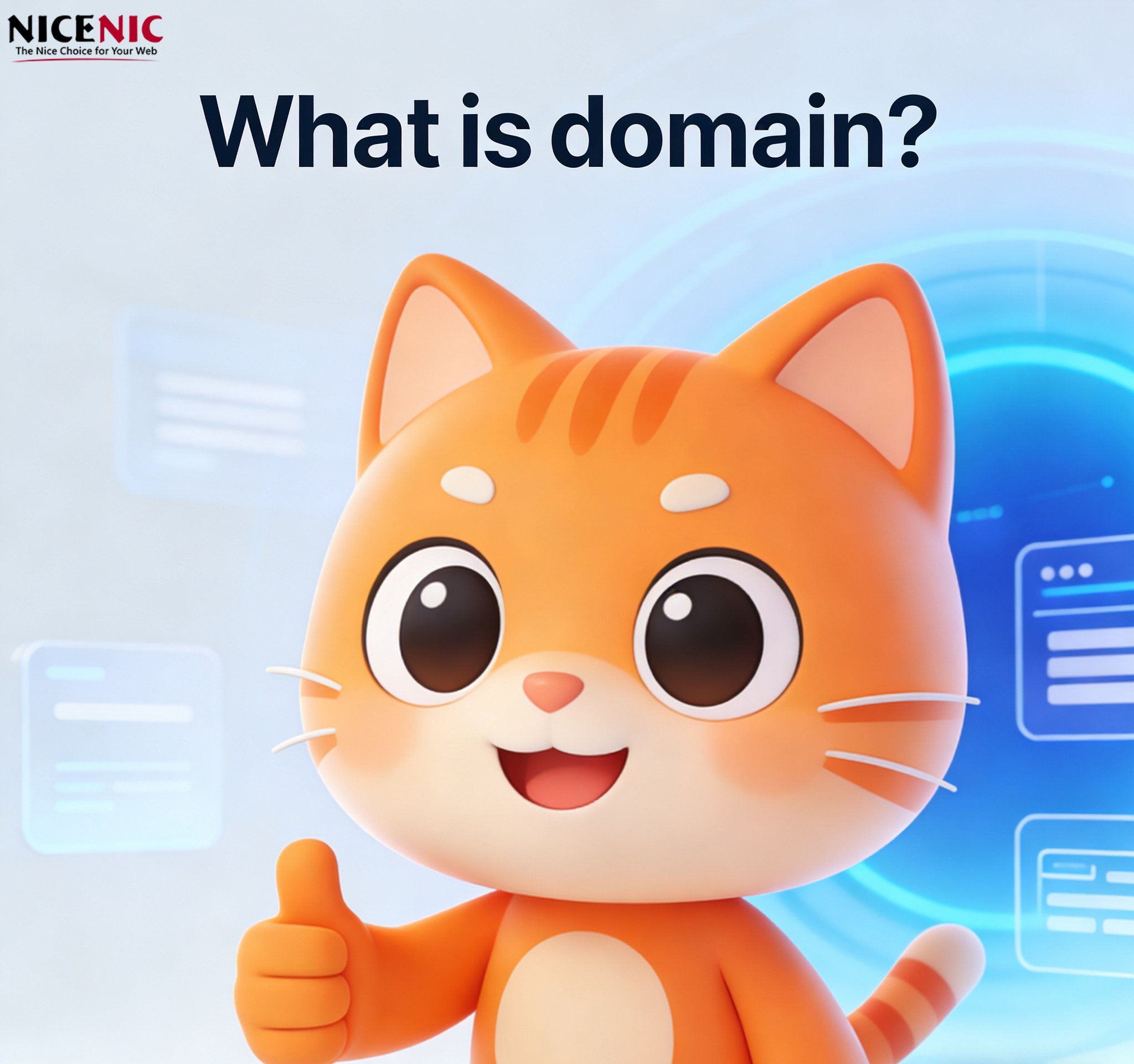
What exactly is a domain name?
And what role does it play in how the internet works?
A domain name might look like a simple label on the surface, but behind it lies a complex system that involves the DNS structure, brand identity, global governance, infrastructure routing, and the cooperation of multiple industry roles. Understanding domain names is the foundation of understanding how the modern internet operates.
In this guide, Nicenic will explain the concept in a clear, professional, and fully accessible way.
1. What Is a Domain Name? The Simple and Professional Definition
From the most straightforward perspective, a domain name is the readable address people use to reach websites and online services.
Examples include: nicenic.com
google.com
amazon.com
A domain name allows us to reach an online resource without memorizing a long numeric IP address such as 142.251.111.100.
From a professional standpoint, a domain name is much more than a readable label.
A domain name is a globally unique, human readable, hierarchical identifier that is mapped to underlying network resources through the Domain Name System.
In other words, a domain name functions as:
- A logical entry point to the internet
- A unified global naming system
- A translator between human language and machine addressing
2. Why Do We Need Domain Names? The Value Behind the System
At the foundation of the internet, communication happens through IP addresses. But what would happen if the internet relied only on IP addresses?
❌People would be unable to remember numeric strings.
❌Businesses would struggle to build a brand with numbers.
❌Moving to a new server would break every link.
❌Governance and policy enforcement would be impossible.
Domain names exist to solve these problems.
The system provides four essential values.
Human Usability: It makes the internet readable for humans.
Stability & Abstraction: It allows services to remain stable even when infrastructure changes.
Governance: It creates a structured naming system that can be governed globally.
Brand Identity: It enables branding, SEO, marketing, and communication.
Domain names are not a convenience; they are a requirement for a functional global internet.
3. The Structure of a Domain Name: TLD, SLD, and Subdomain
Consider the example:
www.nicenic.com
The structure can be understood from right to left.
com is the top level domain
nicenic is the second level domain
www is a subdomain
More formally, each domain name includes the following layers.
Root
Every domain technically ends with a "."(root dot), which is usually hidden.
TLD (Top Level Domain)
This is the extension such as com, net, cn, ai, or shop. Each is operated by a registry.
SLD(Second Level Domain)
This is the name registered by the user. In nicenic.com, the second level domain is nicenic.
Subdomain
A subdomain is created by the domain owner. Examples include www, blog, or api.
4. Domain Name, URL, Website, Server, IP, and DNS: What Is the Difference
People often confuse these concepts, so a clear comparison helps.
| Name | What Is It? | What Does It Do? |
|---|---|---|
| Domain Name | Name / Identifier | Human-friendly entry point |
| URL | Full path | Points to a specific resource |
| DNS / Nameserver | Translation system | Translates domain names into IPs |
| IP Address | Network locator | Tells the browser where the server is |
| Server | The “house” | Stores the website |
| Website | Content |
The final pages shown to users |
5. What Happens When You Visit a Domain Name
When you type nicenic.com into your browser, the following sequence takes place.
-
Browser checks local cache
-
Queries the ISP’s DNS resolver
-
Resolver queries the Root DNS servers
-
Root returns the TLD servers for .com
-
Resolver queries the .com registry
-
Registry returns the domain’s nameservers
-
Resolver queries those nameservers
-
Nameserver returns the A record (IP address)
-
Browser locates the server
-
Loads the website content
6. The Main Types of Domain Extensions
Top level domains fall into three major categories.
gTLD (Generic Top Level Domains)
These include com, net, org, info, and xyz. They are overseen by ICANN.
ccTLD (Country Code Top Level Domains)
These include cn, uk, de, jp, and many more. They are operated by national or regional authorities.
new gTLD (New Generic Top Level Domains)
These include app, shop, vip, cloud, dev and many others created under the ICANN expansion program in 2012.
Each category has different pricing structures, policies, and lifecycles.
7. How Domain Names Influence Branding, SEO, and Business Value
Domain names affect many aspects of an online business.
Customer trust
Search visibility
Brand strength
Marketing efficiency
Memorability
Resale or asset value
Shorter names tend to be more valuable.
Names that match the brand are easier to market.
Country domains help local SEO.
New extensions offer creative naming opportunities.
A domain name is not just a label. It is a business asset.
Conclusion: The Domain Name Is the Entry Point of the Modern Internet
By now, you should have a clear understanding that a domain name is far more than a simple website name.
A domain name is a core layer of internet infrastructure.
The DNS system is what enables the global internet to scale.
Domain names unify technology, policy, branding, and governance.
If you are building a brand, launching a project, or expanding a digital presence, choosing a stable and reliable domain registrar is essential.
As an ICANN accredited registrar trusted by Verisign and HKIRC, Nicenic provides secure, stable, and transparent domain services for users worldwide. With professional support and global capabilities, nicenic helps businesses build and protect their online identity with confidence.
Next News: Why Global Brands Are Turning Back to Their Domains